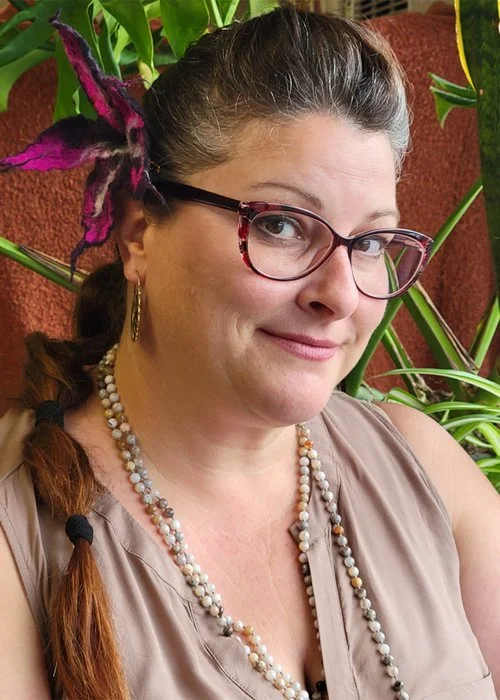
Andi B. Meyer is a multidisciplinary artist and teaching artist based in Ventura County, California. Working across fiber, printmaking, and mixed media, her practice explores mythology, memory, lineage, and the quiet architecture of domestic ritual.
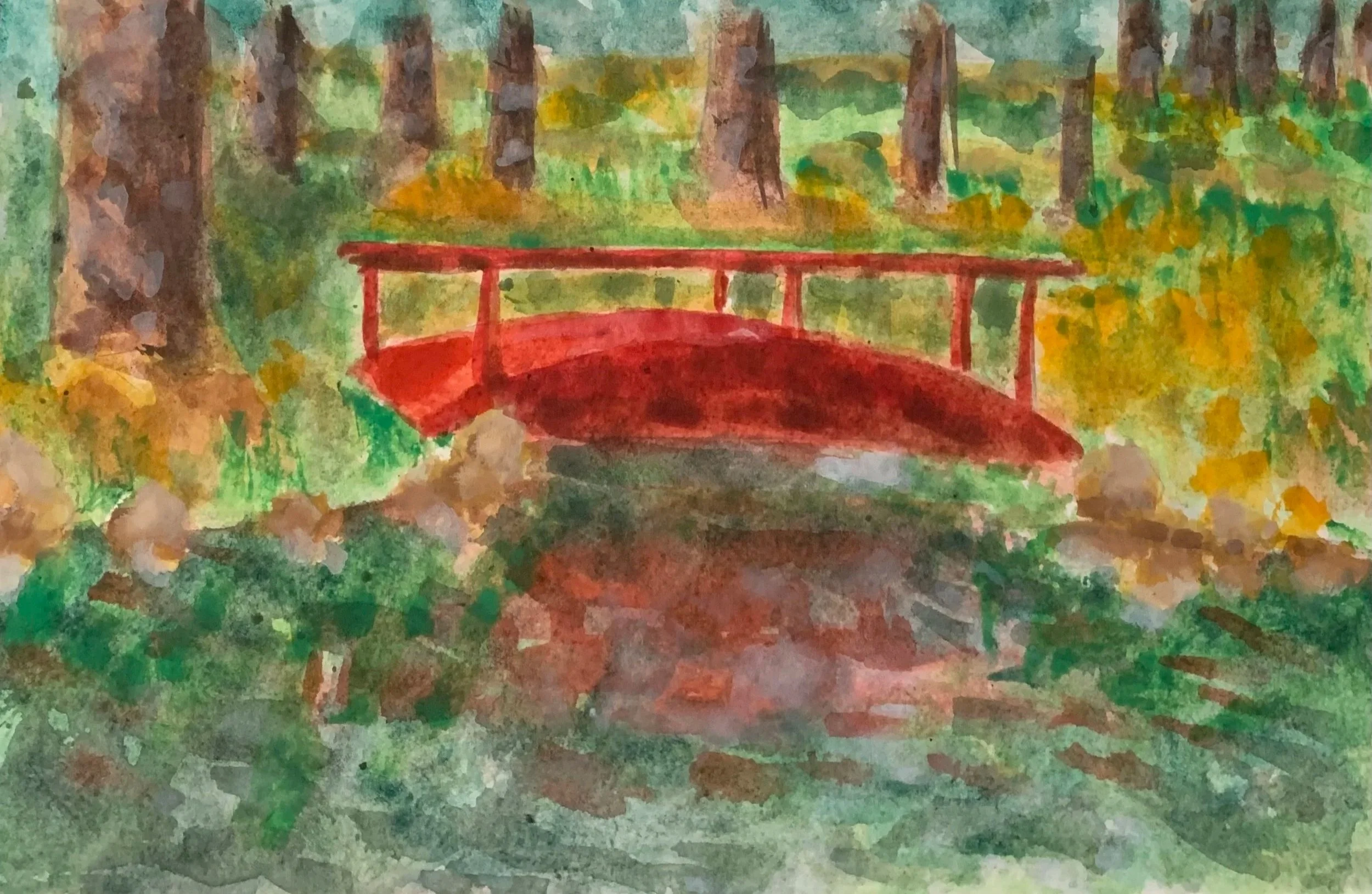
Meyer’s work moves fluidly between hand-spun fiber, pine needle basketry, relief and monoprint processes, watercolor, and sculptural forms. Her ongoing Forgotten Goddesses series investigates feminine archetypes through reliquary-like objects, woven structures, and layered prints that reference both ancient material traditions and contemporary personal narrative.
Alongside her studio practice, Meyer is an active teaching artist, leading workshops in fiber arts and printmaking through regional institutions including the Santa Paula Art Museum’s Cole Creativity Center and the Wende Museum in Culver City. Her classes emphasize material literacy, process-based exploration, and the transformative potential of working with the hands.
Her work has been exhibited throughout Southern California, and the Forgotten Goddesses series has been selected for an upcoming solo exhibition.
Meyer holds a BA in Fine Art and Psychology from California State University Channel Islands and an M.Ed. from California Lutheran University. She currently maintains an active studio practice while developing new bodies of work in fiber and print.
Practice
Andi B. Meyer’s work explores memory, lineage, and material transformation through fiber, printmaking, and mixed media. Drawing from archaeological fragments, mythic archetypes, and domestic labor, she creates objects that function as contemporary artifacts—works that exist between ritual object, relic, and image.
Material is structural within her practice rather than illustrative. Wool, paper, ink, thread, and natural fibers are selected for their cultural histories as much as their physical properties. Processes such as felting, weaving, and monoprinting introduce both control and unpredictability, allowing material resistance to shape the final form.
Recurring references to goddess forms, reliquaries, and liminal landscapes anchor the work, positioning each piece as something unearthed rather than depicted.